If you’re shopping for home internet in the USA and wondering whether to switch to 5G Home Internet, you’re in the right place. This 2026 guide breaks down exactly what 5G Home Internet is, how it works, who it’s best for, and how it stacks up against cable, fiber, DSL, and satellite.
Whether you’re a streamer, remote worker, gamer, or just tired of rising cable bills, you’ll walk away knowing if 5G Home Internet makes sense for your home—and which provider to choose.
Ready to see what’s available at your address? We’ll show you how to check in seconds.
What Exactly Is 5G Home Internet?
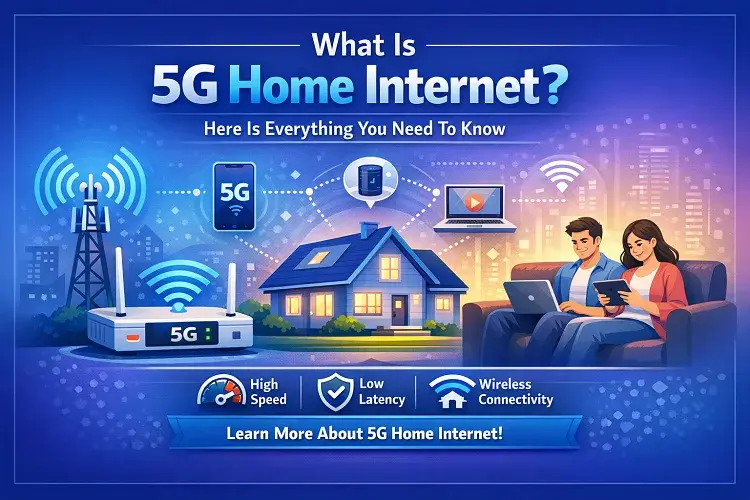
5G Home Internet (also called 5G Fixed Wireless Access or FWA) is a wireless broadband service that delivers high-speed internet to your home without any cables running underground or to your house.
Instead of fiber-optic lines or cable infrastructure, it uses the same advanced 5G cellular network that powers your smartphone. A small home router (gateway) placed inside your house connects wirelessly to nearby 5G radio towers and small-cell transmitters. Data travels through the air using high-capacity frequencies, giving you fast, reliable home internet with zero digging or technician visits in most cases.
It’s especially popular in areas where traditional wired options are expensive, slow, or simply unavailable. As of 2026, 5G Home Internet has become a mainstream alternative for millions of American households.
How Does 5G Home Internet Work?
Here’s the simple, step-by-step process:
- Your provider’s 5G towers and small cells send data over the air using mid-band spectrum (like C-band) and mmWave frequencies.
- The signal reaches the compact home router/gateway you place near a window for the best reception.
- The gateway creates a strong private Wi-Fi network for every device in your home—phones, laptops, smart TVs, gaming consoles, and more.
No drilling, no wires from the street, and setup usually takes under 15 minutes. The entire connection stays wireless from the tower to your living room.
Key Benefits of 5G Home Internet
According to detailed research from HighSpeedInternet.com, 5G Home Internet offers several clear advantages:
- Unlimited data with no caps or throttling surprises.
- No annual contracts—cancel anytime.
- No installation or equipment fees—the gateway is provided at no extra cost.
- Bundling discounts—save significantly if you already have the provider’s mobile phone plan.
- Prepaid gift cards on select sign-ups.
- Fast self-setup—plug it in, and you’re online.
It’s ideal for small to mid-sized households and works great for everyday needs like 4K streaming, video calls, online school, and light gaming.
Potential Drawbacks to Consider
Like any wireless service, 5G Home Internet has limitations:
- Limited availability—strongest in urban and suburban areas; check your exact address.
- Potential for unstable connections—performance depends on local cell-tower signal strength.
- Speed variability—real-world speeds can fluctuate based on network traffic and location.
- No multi-gig or symmetrical upload/download plans—downloads are prioritized.
- Best for moderate use—not ideal for heavy VR, large file backups, or professional livestreaming in every location.
If your area has poor 5G coverage, speeds may not meet expectations. Always run a speed test after setup (most providers offer a 30-day trial).
5G Home Internet vs. Fiber, Cable, DSL & Satellite
| Internet Type | Typical Speeds | Monthly Price | Contracts / Data Caps | Reliability | Best For |
|---|---|---|---|---|---|
| 5G Home | 30–1,000 Mbps (typical 300 range) | $45–$70 | None / Unlimited | Good (location-dependent) | Easy setup, urban/suburban value |
| Fiber | 100–5,000 Mbps (symmetrical) | $30–$250 | Varies | Excellent | Power users, future-proof |
| Cable | 25–1,200 Mbps | $20–$115 | Often / Sometimes | Good | Urban homes with existing infrastructure |
| DSL | 1–100 Mbps | $40–$70 | Varies | Fair | Budget basic use |
| Satellite | 50–220 Mbps | $70–$150 | Varies / Often | Fair (weather sensitive) | Very remote areas |
Bottom line: 5G Home Internet shines as an affordable, hassle-free alternative to DSL and a strong competitor to cable—especially when fiber isn’t available yet. Fiber remains the gold standard for ultimate speed and consistency.
Top 5G Home Internet Providers in the USA (2026)
Here are the leading providers based on current plans, pricing, speeds, and availability:
- T-Mobile 5G Home Internet (Widest Availability & Best Overall Value)
- Rely Home Internet: $50/mo with AutoPay (up to 318 Mbps)
- All-In Internet: $70/mo with AutoPay (up to 498 Mbps). Discounts for T-Mobile wireless customers. Unlimited data, no contracts, no equipment fees. Often, the easiest choice for suburban and urban homes.
- Verizon 5G Home Internet (Best Speeds in Strong Coverage Areas)
- Standard: $50/mo ($35/mo with qualifying Verizon Unlimited plan) — up to 300 Mbps
- 5G Home Internet Plus: $60/mo ($45/mo bundled) — up to 500 Mbps. Excellent for households that need faster performance and already have Verizon mobile service.
- AT&T Internet Air (Great DSL Alternative for AT&T Customers) $60/mo with up to 300 Mbps. Unlimited data, no annual contract. Strong option in areas without fiber, with reliable service and easy setup.
- Starry Internet (Best Low-Price Option in Select Cities) Starry 300: $45/mo with debit discount (up to 300 Mbps). Limited to specific metro areas (Boston, New York, Denver, DC, etc.), but delivers excellent value and no contracts.
Pro tip: Availability and exact speeds are highly location-specific. Always enter your ZIP code or full address on the provider’s website before deciding.
How to Choose the Right 5G Home Internet Provider for Your Home
Ask yourself these quick questions:
- Do I already have a mobile plan with T-Mobile, Verizon, or AT&T? (Bundling can save $15–$20/month.)
- How many devices and people use the internet at once?
- Is fiber available at my address? If yes, compare it first.
- Do I need the absolute fastest speeds or just reliable 200–400 Mbps for streaming and work?
Most providers let you test risk-free. Order, set it up, and run speed tests during peak hours. If it doesn’t meet your needs, cancel within the trial period.
Is 5G Home Internet Right for You in 2026?
If you want fast, affordable internet without the hassle of cables, contracts, or data caps, yes—5G Home Internet is often the smartest choice for urban and suburban households. It delivers more than enough speed for Netflix, Zoom, Fortnite, and smart-home devices at a lower cost and easier setup than traditional options.
It’s not perfect for every situation (rural homes far from towers or ultra-high-demand users may prefer fiber), but for the majority of Americans, it’s a game-changer that cuts bills and simplifies life.
Ready to switch? Enter your ZIP code below to instantly compare 5G Home Internet plans available at your address, see current promotions, and get real-world speed estimates.
Don’t overpay for outdated service. Join the growing number of households enjoying simple, unlimited 5G Home Internet today.
Frequently Asked Questions
1. Is 5G Home Internet as fast as fiber?
No—fiber offers higher and more consistent speeds—but 5G Home Internet is plenty fast for 98% of everyday use.
2. Will it work in my area?
Best in urban and suburban locations with a strong 5G signal. Check your address—availability is expanding rapidly.
3. Can I use my own router?
Most gateways work in bridge mode, or you can add your preferred mesh system.
4. What if speeds are slower than advertised?
Speeds are “up to” and depend on local conditions. Test during peak hours and contact support—many providers offer credits or upgrades.