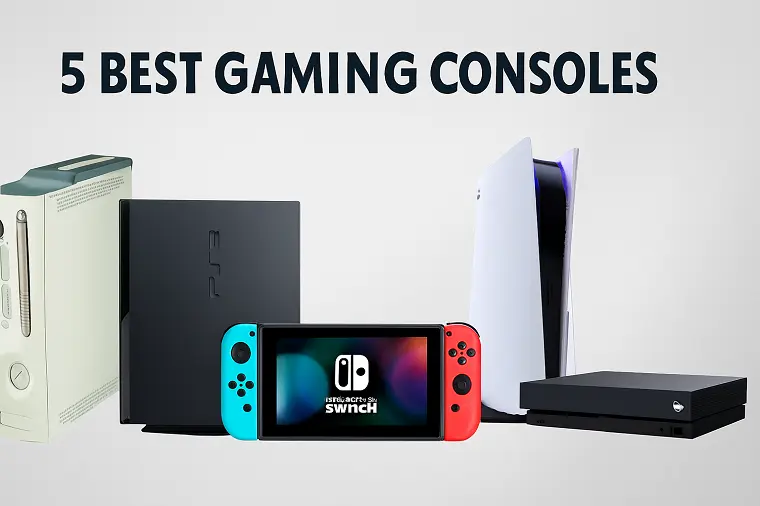
Choosing the best gaming console in 2025 means balancing price, performance, exclusive games, family features, connectivity, and ease of use. The landscape is more diverse than ever, with fierce competition between Sony, Microsoft, Nintendo, and powerful newcomers in handheld and hybrid designs.
Whether you’re a budget-conscious gamer, a parent looking for family fun, or a competitive online player, this guide breaks down the Top 5 gaming consoles with practical info you won’t find in jargon-heavy product pages. Let’s dive into features, value, speed, online play, and the questions every buyer should ask before investing in their next gaming system.
Quick Comparison: Top 5 Gaming Consoles (2025 Edition)
| Console | Price (USD) | Best Features | Online Services | Family Friendly |
|---|---|---|---|---|
| PlayStation 5 Slim/Pro | $499–$699 | Stunning 4K/8K, exclusives, VR | PS Plus, PS Now | Moderate |
| Xbox Series X/S | $299–$499 | Most powerful, Game Pass, 4K | Xbox Live, Game Pass | Moderate |
| Nintendo Switch 2 OLED | $349–$449 | Portable, Joy-Con 2, 4K docked | Nintendo Switch Online | Excellent |
| Asus ROG Ally/Legion Go | $500–$800 | Handheld PC, Windows gaming | Steam/Xbox/Cloud | Low |
| Meta Quest 3 VR | $499 | Wireless VR, huge VR library | Meta Online | Moderate |
Which Console Offers the Best Value for Budget-Conscious Gamers?
If price and value are your top priorities, focus on the Xbox Series S ($299) and Nintendo Switch (OLED/2) ($349–$449). Here’s why:
-
Xbox Series S: Delivers next-gen performance (ray tracing, 120fps) at the lowest price. Xbox Game Pass is a game-changer, giving access to hundreds of blockbuster games for a monthly fee—a huge cost-saver for those who like variety or multiplayer.
-
Nintendo Switch OLED/Switch 2: Outstanding family-friendly value, portable gaming, and a library packed with classics. Nintendo’s bundles often include popular games or accessories. Switch also holds its resale value longer than competitors.
Both consoles can play new releases, and the Switch’s hybrid/portable function gives unmatched versatility for travel, family play, and casual gaming.
How Do Nintendo’s Gaming Consoles Excel for Families?
Nintendo Switch 2 OLED and the updated Switch series shine thanks to:
-
Innovative Joy-Con 2 controllers—easy for small hands, encourage motion and group play
-
Exclusive family-friendly franchises like Mario, Zelda, Animal Crossing, Pokémon
-
Docked and portable modes—play on the TV, or take it on the road
-
Simple parental controls—monitor time, restrict purchases, filter game ratings
-
Robust family multiplayer with titles like Mario Kart, Super Smash Bros, and Switch Sports
No other console matches Nintendo’s mix of safe, collaborative, and creative games, making it the top choice for families, younger gamers, and group entertainment.
What Gaming Console Delivers the Best Online Experience?
1. Xbox Series X leads online gaming in 2025, with Xbox Live and Game Pass Ultimate setting the standard:
-
-
High-powered cloud servers and minimal lag
-
Cross-platform multiplayer (play with friends on PC/mobile/Xbox)
-
Massive online library, including day-one exclusives
-
Easy voice chat, groups, tournaments, and esports features
-
2. PlayStation 5 Slim/Pro offers a strong, immersive online platform (PS Plus, PS Now) with plenty of exclusives and high-fidelity gameplay, but tends to have smaller parties and slightly less stable servers than Xbox during peak hours.
3. Nintendo Switch Online is good for casual play, but limited in cross-play features and voice chat.
4. Meta Quest 3 VR and handheld PCs (ROG Ally, Legion Go) use Wi-Fi 6/7 or Ethernet, and rely heavily on third-party services (Steam, Xbox) for online. These devices are ideal for tech enthusiasts but less intuitive for console-only players.
How Important is Internet Speed for Gaming Consoles?
-
Recommended:
-
3–5 Mbps for casual/online multiplayer per device
-
25+ Mbps for 4K game streaming, downloads, and updates
-
Upload speeds matter for voice chat, livestreaming, and competitive gaming
-
-
Wired Ethernet connections (GBE/LAN) are preferred for minimal latency and stability, especially for esports and online shooters.
-
Modern consoles support Wi-Fi 6/7, which can handle multiple devices, high bandwidth, and faster downloads. Poor router placement or slow ISP speeds can hurt performance, even if your console is top-of-the-line.
For high-end consoles (PS5 Pro, Xbox Series X) or VR, consider upgrading internet plans and routers to avoid lag, disconnections, and delays.
What Should You Consider When Choosing Gaming Consoles?
Here’s a quick checklist to match the right console to your needs:
-
Game Library: Look for exclusives and genres you enjoy.
-
Performance: Storage, graphics, and frame rates—important for 4K, VR, and next-gen titles.
-
Price & Ongoing Costs: Hardware, subscriptions, accessories, games, and repairs.
-
Family Features: Parental controls, multiplayer modes, safety settings.
-
Portability: Do you want home-only, hybrid, or full portability?
-
Online Experience: Multiplayer stability, community size, cross-platform support.
-
Future-Proofing: Is there enough storage, and will your system support new releases for years?
-
Support/Updates: How quickly does the console get security and feature updates?
-
Internet Requirements: Match your internet speed and router to your console’s online features.
How Do Internet Prices Affect Your Gaming Console Choice?
-
Cloud Gaming & Streaming: Xbox Game Pass Ultimate, PlayStation Now, and VR platforms all use high bandwidth for game streaming. Higher ISP costs can add up fast if you’re streaming instead of downloading.
-
Download Sizes: Modern games now exceed 100GB—budget for both game costs and ISP data caps (especially for high-speed broadband).
-
Online Subscriptions: Beyond hardware, you’ll pay for online access (Xbox Live, PS Plus, Nintendo Online) and cloud saves.
Tip: If your area has slow or expensive internet, lean toward consoles with strong offline single-player libraries (like Nintendo Switch). Urban gamers with gigabit service can take full advantage of cloud gaming on Xbox and PlayStation.
Conclusion
In 2025, gaming consoles offer more features, diversity, and power than any previous generation. Choose wisely, based on your favorite genres, who you play with, your budget, and whether online play or portability matters most. Whether you go with Sony, Microsoft, Nintendo, or a portable PC/VR hybrid, today’s systems guarantee hundreds of unforgettable gaming moments.
Ready to play? Choose, connect, and game on—your perfect console is waiting!
Frequently Asked Questions: Gaming Consoles
1. Which is the absolute best gaming console for 2025?
Most experts agree: PlayStation 5 Slim/Pro and Xbox Series X top the list for power, exclusives, and online play. For families, Nintendo Switch 2 OLED is unmatched.
2. What is the most affordable console for new gamers?
XBox Series S and Nintendo Switch OLED offer great modern play at lower prices.
3. Are handheld PCs a good alternative to classic consoles?
Yes, for tech-savvy gamers. Asus ROG Ally X and Lenovo Legion Go run PC games portably, but have higher prices and complexity.
4. Is 4K or 8K gaming really worth it?
Serious gamers and home theaters benefit, but most players are very happy with HD or 4K.
5. Can consoles be used for streaming and media, not just games?
Absolutely; all major consoles support popular apps like Netflix, Disney+, Spotify, and YouTube.
6. Do I need fast internet for online gaming?
Reliable broadband (25+ Mbps) is essential for smooth online play, fast downloads, and software updates.
7. What role does Game Pass play for budget customers?
Game Pass and similar subscriptions massively reduce the total spend on games—perfect for those who want variety.
8. Are parent controls easy to set up?
Yes! Modern consoles offer app-based parental controls, detailed time limits, purchase restrictions, and content filters.