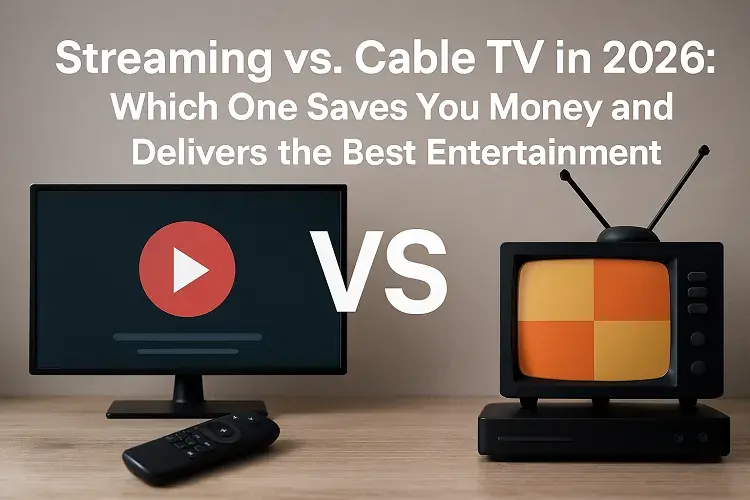
In 2026, the battle between streaming services and traditional cable TV continues to evolve, with more Americans cutting the cord than ever before. As streaming platforms surpass 50% of U.S. TV consumption, deciding between the two boils down to your viewing habits, budget, and preferences for content. This comprehensive guide compares costs, content, top providers, pros, and cons to help you choose the best option for your household.
Understanding Streaming vs. Cable TV
Streaming services deliver content over the internet, allowing on-demand access to movies, shows, and live TV without a traditional cable box. Popular examples include Netflix for originals and YouTube TV for live channels. Cable TV, on the other hand, uses coaxial cables or satellite signals to provide bundled channels, often including local broadcasts, sports, and premium networks like HBO.
The key difference? Streaming requires a strong internet connection (at least 25 Mbps for HD), while cable often bundles TV with internet and phone services. In 2026, hybrid options blur the lines, with cable providers like Xfinity offering streaming apps and streamers adding live TV bundles.
Cost Comparison: Is Streaming Really Cheaper?
One of the biggest myths is that streaming is always more affordable than cable. While individual streaming services start low, subscribing to multiple platforms can exceed cable costs. Let’s break it down.
Average Costs in 2026
- Streaming: Basic on-demand services like Netflix start at $8/month, Disney+ at around $11 with ads, and HBO Max (now Max) at $18 ad-free. Live TV streamers like YouTube TV cost $83/month, Hulu + Live TV $95 (no ads), and Sling TV $45+. Bundles help: The Disney+, Hulu, and Max trio is $20 with ads or $33 ad-free, saving up to 42% compared to separate subs.
- Cable TV: Traditional packages range from $50–$150/month, plus fees for equipment ($10–$20), installation, and taxes. Xfinity’s basic plan starts at $20/month (with internet bundle), but premium tiers hit $100+. Satellite options like DIRECTV begin at $85 for 165 channels, often with two-year contracts.
If you subscribe to 4–5 streaming services (e.g., Netflix, Disney+, Hulu, Max, and Peacock), your bill could reach $50–$80/month—comparable to basic cable. Add live TV like YouTube TV, and it jumps to $100+. Cable often includes more channels (200+) in one package, but hidden fees inflate costs by 20–30%. Streaming wins for flexibility: No contracts mean easy cancellations, and deals like Walmart+ (which includes Paramount+ Essential) offer free trials.
Verdict: Streaming is cheaper for light viewers ($20–$50/month), but heavy consumers might save with cable bundles ($80–$120 all-in).
Content and Features: Variety vs. Reliability
Content is king in 2026, with streaming dominating originals and cable excelling in live events.
Streaming Content
Streaming offers vast libraries of on-demand shows, movies, and exclusives. Netflix leads with hits like “Stranger Things,” while Disney+ shines for Marvel and Star Wars. Live options like Fubo provide 200+ channels focused on sports. Features include 4K streaming, offline downloads, and personalized recommendations—no channel surfing required.
Cable Content
Cable provides 100–500 channels, including locals, news, and sports networks like ESPN. Providers like Spectrum offer on-demand libraries and DVR, but content is schedule-based. Premium add-ons (e.g., HBO) cost extra, similar to streaming.
In 2026, streaming edges out with exclusive series, but cable is better for live sports without buffering (assuming a good signal). Both now support multi-device viewing, but streaming’s ad-supported tiers (e.g., Peacock at $8) mimic cable commercials.
Top Streaming Providers in the USA for 2026
Here are the leading streaming services, based on popularity, content, and value:
- Netflix ($8–$23/month): Best for originals like “The Crown.” Massive library, but no live TV. Ideal for binge-watchers.
- Disney+ ($11–$18/month): Family-friendly with Pixar, Marvel, and Star Wars. Bundles with Hulu and ESPN+ for sports fans.
- Hulu ($8–$18/month, $95 with Live TV): Next-day episodes from networks, originals like “The Bear.” Live bundle includes 95+ channels.
- Max (HBO Max) ($18/month ad-free): Premium content like “Succession” and Warner Bros. films. Strong for movies and DC.
- Amazon Prime Video ($9/month standalone): Included with Prime ($139/year). Exclusives like “The Boys,” plus live sports.
- Peacock ($8–$14/month): NBC shows, movies, and live sports. Affordable with ads.
- YouTube TV ($83/month): 100+ live channels, unlimited DVR. Top for sports and locals.
- Sling TV ($45+/month): Customizable with 30–50 channels. Cheapest live option.
- Fubo ($80+/month): Sports-heavy with 200+ channels, 4K events.
- Paramount+ ($6–$12/month): CBS shows, Star Trek, and live NFL.
These providers dominate with over 80% market share, focusing on bundles to combat “subscription fatigue.”
Top Cable TV Providers in the USA for 2026
Traditional cable still holds strong for reliability:
- Xfinity (Comcast) ($20–$100/month): 200+ channels, bundles with internet. High satisfaction (76%).
- Spectrum (Charter) ($50–$90/month): No-contract plans, Spectrum TV Stream (78% satisfaction). Best value.
- Verizon Fios ($50–$110/month): Fibre-optic speed, 425+ channels. 77% satisfaction.
- Cox ($50–$140/month): Custom bundles, strong in West/South.
- DIRECTV ($85+/month): Satellite with 340+ channels, NFL Sunday Ticket.
- DISH ($60–$110/month): Hopper DVR, rural coverage.
- Optimum ($30–$120/month): East Coast focus, Altice bundles.
These providers serve 90% of U.S. households, with Spectrum leading in customer satisfaction.
Pros and Cons of Streaming vs. Cable
Streaming Pros:
- Flexibility: Watch anywhere, cancel anytime.
- Cost Savings: Pay only for what you use; bundles reduce overlap.
- Content Variety: Exclusives and global libraries.
- No Equipment: Just an app on smart TVs or devices.
Streaming Cons:
- Internet Dependency: Buffering with slow speeds.
- Fragmentation: Content spread across services.
- Ads and Price Hikes: Basic tiers have commercials; prices rose 10–20% in 2025.
- Limited Live Options: Not all have locals or full sports.
Cable Pros:
- Reliability: No buffering, consistent quality.
- All-in-One: Bundles save on internet/TV/phone.
- More Channels: Better for news, sports, and kids’ programming.
- DVR Included: Record shows easily.
Cable Cons:
- Higher Costs: Fees add up; contracts lock you in.
- Less Flexibility: Fixed schedules, installation required.
- Outdated Tech: Fewer on-demand options.
- Declining Networks: Some channels may shut down in 2026 (e.g., regional sports).
Future Trends in 2026
By mid-2026, streaming will dominate, with YouTube surpassing broadcast networks. Bundles like the Disney trio will grow, and AI recommendations will personalize viewing. Cable may integrate more streaming (e.g., Xfinity’s app), but expect price parity as streamers add ads and live content. Sustainability tip: Streaming uses less energy than cable boxes.
Which Option Is Best for You?
- Budget-Conscious: Go streaming with Sling or Peacock.
- Sports Fans: YouTube TV or Fubo for live events; DIRECTV for NFL.
- Families: Disney+ bundle or Hulu + Live TV.
- All-Rounders: Cable-like Spectrum for simplicity.
- Cord-Cutters: Start with free trials (Hulu 30 days, Apple TV+ 7 days).
Test with a month of each—most offer refunds.
Conclusion
In 2026, streaming offers superior flexibility and innovation, but cable remains reliable for comprehensive coverage. If your total streaming subs stay under $80, it’s likely cheaper; otherwise, cable bundles win. Ultimately, the best choice aligns with your content needs—mix both for the ultimate setup.
Updated on: February 20, 2026