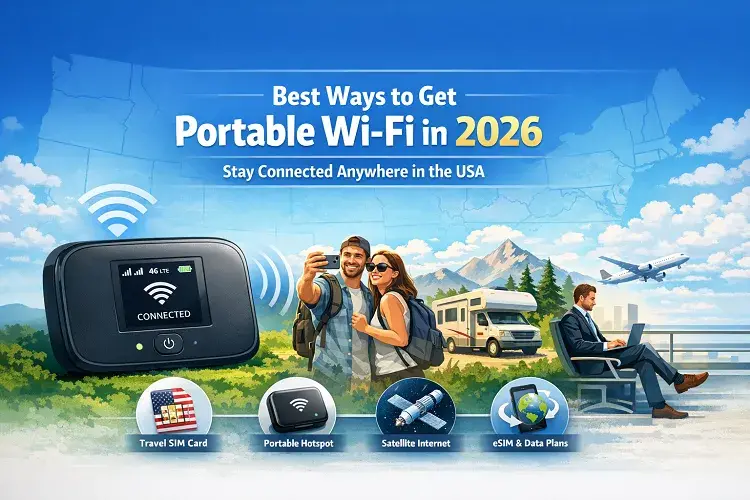
In today’s fast-paced world, reliable internet isn’t a luxury—it’s a necessity. Whether you’re a digital nomad working from a national park, a family road-tripping across the USA, a remote worker in a rural area, or someone needing backup connectivity during outages, portable Wi-Fi delivers freedom and flexibility. Unlike traditional home broadband tied to a fixed address, portable Wi-Fi leverages cellular 5G/4G networks or satellite signals to provide high-speed internet on the go.
This comprehensive guide explores the best portable Wi-Fi options available in 2026, updated with the latest reviews, data plans, speeds, and real-world performance from sources like PCMag, Wirecutter, and HighSpeedInternet.com. We’ll cover top devices, providers, costs, pros/cons, and expert tips to help you choose the perfect solution for your needs in the United States.
What Is Portable Wi-Fi and How Does It Work?
Portable Wi-Fi, often called a mobile hotspot, is a compact device or service that creates a personal Wi-Fi network using cellular data (5G or 4G LTE) or satellite connections. It converts mobile signals into a secure Wi-Fi signal that multiple devices—laptops, tablets, smartphones, and smart gadgets—can connect to simultaneously.
Unlike fixed home internet (cable, fiber, or DSL), portable options are designed for mobility. Key technologies include:
- 5G Mobile Hotspots: Deliver blazing-fast speeds (often 100–1000+ Mbps download in good coverage) with low latency for streaming, video calls, and gaming.
- Satellite Internet (e.g., Starlink Roam): Provides connectivity in remote or off-grid areas where cellular signals are weak or nonexistent.
- Smartphone Tethering: Using your phone’s data as a hotspot (simple but drains battery and may have limits).
- Dedicated MiFi Devices: Standalone battery-powered hotspots offering better battery life, more connections, and dedicated data plans.
Portable Wi-Fi shines for travel, RVs, camping, business trips, and as a home backup. However, it typically costs more per GB than fixed broadband and may be subject to deprioritization during network congestion.
Latest Data (2026): According to recent coverage reports, T-Mobile leads in 5G availability (covering over 330 million Americans), Verizon excels in reliability (especially rural), and AT&T offers strong 4G LTE fallback. 5G now reaches most urban and suburban areas, with average speeds improving year-over-year per Ookla tests.
Benefits of Portable Wi-Fi
- Mobility: Take your internet anywhere—no cables or installation required.
- Multi-Device Support: Connect 10–64+ devices simultaneously.
- Backup Reliability: Ideal during power outages or when home internet fails.
- Global/Travel Flexibility: Many unlocked devices work internationally with eSIM or local SIMs.
- Ease of Use: Quick setup via apps; many include touchscreens and battery power.
Real-world users report seamless Zoom calls from hiking trails and uninterrupted Netflix in RVs, thanks to advancements in 5G and Wi-Fi 6/6E/7 technology.
Challenges and Considerations for Portable Wi-Fi
While powerful, portable Wi-Fi has limitations:
- Data Caps and Costs: Unlimited plans often throttle speeds after high usage. Premium data (high-speed allotment) ranges from 10GB to 150GB+ monthly.
- Coverage Dependency: Performance varies by location, carrier, and terrain. Urban areas shine; deep rural or forested spots may need satellite.
- Battery Life and Power: Dedicated devices last 8–15 hours; many require power banks for extended use.
- Speed Variability: 5G can hit gigabit speeds but drops to 4G LTE (20–100 Mbps) in weaker areas.
- Expense: Devices cost $100–$600; plans range $30–$165/month. Not ideal as a primary home internet long-term due to higher costs and potential throttling.
Pro Tip: Check carrier coverage maps using your exact travel or work locations. Tools like FCC broadband maps or carrier apps provide accurate 2026 data.
Top Portable Wi-Fi Options in 2026: Best Devices and Services
Based on 2026 reviews from PCMag, Wirecutter, Travel + Leisure, and others, here are the standout portable Wi-Fi solutions tailored for USA users.
1. Best Overall for Fast Mobile Data: T-Mobile Home Internet Away / Inseego MiFi Devices
T-Mobile’s AWAY Unlimited plan ($160/month) stands out for unlimited 5G data, supporting up to 64 devices. Equipment is often included, with Wi-Fi 6 support. The Inseego MiFi X PRO 5G (around $264) or Franklin JEXtream RG2100 are top-rated for T-Mobile’s expansive network.
- Pros: Excellent 5G speeds, large device support, and price lock guarantees.
- Cons: Needs a power source for some gateways; best in T-Mobile coverage areas.
- Best For: Urban/suburban travelers and remote workers needing consistent high-speed access.
Other strong T-Mobile options include the Inseego MiFi X PRO 5G, praised for its powerful antennas and up to 32 connections.
2. Best for Verizon Users: Inseego MiFi X Pro 5G UW or Orbic Speed 5G UW
Verizon’s reliable network powers devices like the Inseego MiFi X Pro 5G UW (Wirecutter’s top pick) and Orbic Speed 5G UW. These offer strong battery life (up to 13+ hours), 5G Ultra Wideband speeds, and generous plans with 150GB premium hotspot data ($110/month standalone or add-ons to phone plans).
- Pros: Superior rural reliability, reverse charging, excellent data allotments.
- Cons: Higher costs for standalone plans.
- Best For: Users prioritizing coverage in remote or travel-heavy states.
3. Best for AT&T: NETGEAR Nighthawk M7 Pro or Franklin A50
The NETGEAR Nighthawk M7 Pro delivers Wi-Fi 6E, up to 64 connections, and solid 5G performance on AT&T’s network. The Franklin A50 excels in battery life for all-day use. Plans offer 100GB+ hotspot data.
- Pros: Rugged options, fast gaming/streaming capabilities.
- Cons: Slightly pricier device costs.
- Best For: AT&T loyalists needing multi-device support for families or teams.
4. Best for Remote and Off-Grid Areas: Starlink Roam with Mini Dish
Starlink’s Roam Unlimited ($165/month + $599 equipment) uses satellite technology for near-anywhere coverage with a clear sky view. The Mini dish is backpack-portable, supporting up to 128 devices with Wi-Fi 6 and Ethernet.
- Pros: True portability in rural/wilderness areas, unlimited data, and low-latency improvements in 2026.
- Cons: Requires outdoor setup and power; speeds can vary with congestion.
- Best For: Campers, RVers, and users in areas with poor cellular coverage.
5. Best Budget/Travel-Friendly Unlocked Hotspots
- SIMO Solis Lite / Hero: CloudSIM technology for global coverage (great for international trips from the USA), pay-as-you-go data, compact design (~$169).
- GlocalMe G4 Pro or Numen Air 5G: Unlocked, multi-network support, easy eSIM, ideal for frequent travelers.
- TravlFi JourneyGo or RoamWiFi: Flexible prepaid options for occasional use.
These unlocked devices work across carriers or with local SIMs, offering flexibility without long-term contracts. Many support 10–30 devices with 8–15-hour batteries.
Other Notables: TP-Link models for affordability, NETGEAR Nighthawk M6 series for proven performance.
Best Hotspot Data Plans Comparison (2026)
Choosing the right plan is crucial. Here’s a breakdown of popular options:
- T-Mobile: 10GB ($30), 100GB ($50), or unlimited via AWAY ($160). Strong value for 5G-heavy users.
- Verizon: Up to 150GB premium data ($60–$110/month). Excellent for reliability-focused plans.
- AT&T: 50–100GB options (~$55–$80). Good rural fallback.
- Visible+ or Prepaid: Budget unlimited with speed caps (e.g., 15Mbps on one device for ~$40).
- Starlink Roam: Truly unlimited at $165/month.
Unlimited Caveat: Many “unlimited” plans deprioritize after 50–150GB or cap speeds (e.g., 3–15Mbps). Check for 2026 updates, as carriers have expanded high-speed allotments.
Cost Range: Devices $100–$600 one-time; monthly plans $25–$165. Occasional users save with prepaid or phone tethering.
Smartphone Hotspot vs. Dedicated Portable Wi-Fi Device
Your phone’s built-in hotspot is free and convenient for light use (1–2 devices). However, dedicated devices win for:
- Longer battery life (doesn’t drain your phone).
- More simultaneous connections.
- Better antennas and performance.
- Dedicated data plans, avoiding phone bill surprises.
Expert Advice: For heavy use (>10GB/month or multiple users), invest in a dedicated hotspot. Pair with a travel router (e.g., GL.iNet models) to extend range and add security features like VPN support.
How to Choose the Best Portable Wi-Fi for Your Needs
- Assess Coverage: Use carrier maps or tools like CellMapper for your primary locations.
- Speed and Data Needs: Gamers/streamers need 5G; light browsers can manage 4G.
- Budget: Factor device + plan costs. Look for bundles or promotions.
- Portability: Battery life, size, and weight matter for travel.
- Features: Wi-Fi 6/6E/7, touchscreen, eSIM, external antenna ports.
- Use Case: Road trips (cellular), off-grid (satellite), international (unlocked).
Buying Tips: Purchase from Amazon, carrier stores, or Best Buy for warranties. Read recent user reviews for real 2026 performance. Consider power banks for extended trips.
Portable Wi-Fi for Specific Scenarios
- RV and Van Life: Starlink Roam or Verizon hotspots with strong antennas.
- International Travel from USA: Unlocked SIMO or GlocalMe with global data packs.
- Business/Remote Work: T-Mobile or Verizon for reliable video conferencing.
- Emergency Backup: Any dedicated device as a failover to the home internet.
- Families: High-connection models like Inseego or Nighthawk supporting 30+ devices.
Future of Portable Wi-Fi in 2026 and Beyond
5G deployment continues expanding, with Wi-Fi 7 hotspots emerging for ultra-low latency. eSIM and CloudSIM simplify carrier switching. Satellite options like Starlink are becoming more affordable and portable. Expect better integration with AI for network optimization and longer battery tech.
Conclusion: Find Your Perfect Portable Wi-Fi Solution
The best portable Wi-Fi in 2026 depends on your location, usage, and budget. T-Mobile leads for speed and value in populated areas, Verizon for reliability, Starlink for true remoteness, and unlocked devices like SIMO Solis for flexibility.
Start by checking coverage in your key areas, comparing current plans, and testing with a short-term option if possible. With the right setup, you’ll enjoy seamless connectivity whether exploring America’s national parks or working from a coffee shop in New York.
Ready to cut the cord? Research your carrier’s latest offers or browse top devices on Amazon. Stay connected, stay productive—portable Wi-Fi makes it possible anywhere in the USA.
Updated on: April 1, 2026