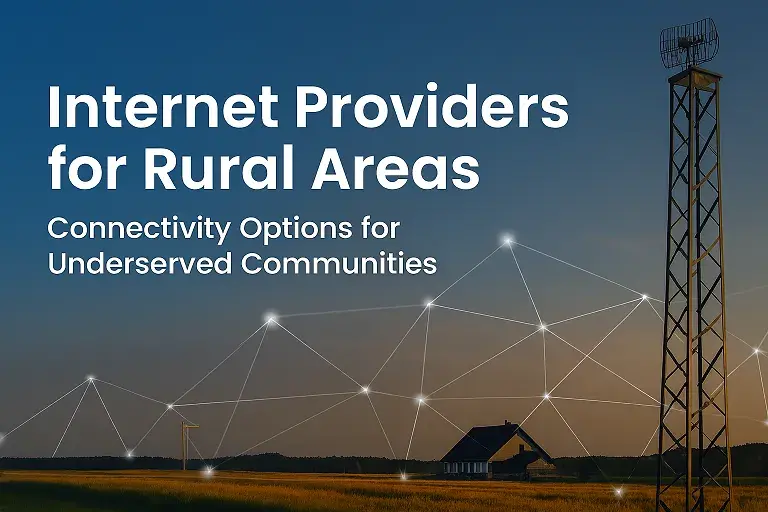
Finding reliable, fast internet service in rural areas has long been one of the most significant challenges facing millions of households across the country. While urban and suburban residents enjoy multiple high-speed options, rural communities often struggle with limited choices, slower speeds, and higher costs. The good news? The landscape of rural internet connectivity is rapidly evolving, with new technologies and government initiatives working to bridge the digital divide. There is a complete guide about the top internet providers for Rural Areas.
Finding the right connection in underserved areas depends on your specific terrain and budget. Here is the 2026 industry consensus:
-
🚀 The Performance King: Starlink (50-250 Mbps). The top choice for low-latency needs like pro-gaming, Zoom calls, and 4K streaming.
-
💰 The Budget Winner: T-Mobile 5G Home Internet ($35-$50/mo). Best for households with a nearby cell tower; offers no-contract, flat-rate pricing.
-
📉 Most Affordable Satellite: Hughesnet (Up to 100 Mbps). Ideal for basic browsing and email with plans starting near $39.99/mo.
-
🛰️ The New Competitor: Amazon Project Kuiper is now live in select regions—offering high-speed LEO connectivity optimized for Prime members.
-
📞 Check Local Availability: Service varies by tree cover and tower proximity. Call (844) 817-0136 for a real-time rural coverage check.
Understanding the Rural Internet Challenge
The statistics paint a clear picture of the connectivity gap. According to recent data, only 61.9% of rural homes have broadband connections compared to 77.6% of non-rural households. This digital divide isn’t just about convenience—it affects education, healthcare access, economic opportunities, and quality of life. Students struggle with online learning, businesses can’t compete in digital markets, and telehealth services remain out of reach for many rural residents.
The infrastructure challenges are significant. Traditional cable and fiber internet require extensive physical infrastructure that’s often economically unfeasible in sparsely populated areas. Laying fiber optic cables to serve a small number of homes over vast distances can cost hundreds of thousands of dollars per location, making it prohibitively expensive for many internet service providers.
Game-Changing Technologies for Rural Connectivity
Satellite Internet: Reaching Remote Locations
Satellite internet has emerged as a powerful solution for areas where ground-based infrastructure simply doesn’t exist. This technology works by transmitting data between a satellite dish at your home and orbiting satellites, requiring no cables or ground infrastructure beyond the initial installation.
Starlink has revolutionized the satellite internet market with its low-earth orbit (LEO) constellation. Unlike traditional geostationary satellites positioned 36,000 kilometers above Earth, Starlink satellites orbit at approximately 550 kilometers, dramatically reducing latency. The service delivers speeds between 50-250 Mbps with a latency of 20-40 milliseconds, making it viable for bandwidth-intensive activities like video conferencing and streaming. With 99.7% coverage across the continental United States, Starlink reaches even the most remote locations. Monthly plans range from $80-$120, with a one-time equipment cost.
HughesNet remains a reliable satellite option, particularly for budget-conscious households. Named the Best Satellite Internet Service Provider of 2024 by U.S. News & World Report, HughesNet offers speeds up to 100 Mbps with unlimited data plans starting at $39.99 per month. The service includes professional installation, built-in Wi-Fi, and a two-year price lock guarantee, providing stability in rural internet costs.
Viasat offers competitive satellite plans with speeds ranging from 25-150 Mbps. Their Viasat Unleashed plan provides unlimited high-speed data without contracts, starting at $119.99 monthly. The Viasat Essentials plan begins at $69.99 per month with 150 GB of high-speed data. Viasat Flex combines satellite internet with fixed wireless technology for improved responsiveness in challenging locations.
5G and 4G Fixed Wireless: The Speed Revolution
Fixed wireless technology leverages cellular networks to deliver high-speed internet directly to homes, offering a compelling alternative to satellite with significantly lower latency and faster speeds.
T-Mobile 5G Home Internet stands out as an excellent value proposition for rural customers. The service reaches 98% of Americans with 5G coverage and serves more than 40 million eligible households. Remarkably, one-third of T-Mobile Home Internet customers reside in rural America. Speeds typically range from 50-100 Mbps, with some areas achieving 87-415 Mbps. Pricing starts at just $50-$70 monthly with no annual contracts, equipment fees, or data caps. The service requires only a 5G gateway device with no professional installation needed.
Verizon 5G Home Internet provides another strong option in areas with 5G infrastructure, delivering speeds up to 300 Mbps. As Verizon continues expanding its 5G network, more rural areas gain access to this high-performance option.
AT&T Fixed Wireless Internet serves select rural locations through the FCC’s Connect America Fund program. The service offers minimum download speeds of 10 Mbps (though the FCC broadband standard is now 100 Mbps) with outdoor antennas connecting to existing cell towers. AT&T has deployed fixed wireless to over 1.1 million locations across multiple states, focusing on areas that received federal funding for broadband expansion.
Traditional Fixed Wireless: Affordable Connectivity
Rise Broadband operates fixed wireless networks across 16 states, serving a population of 16 million. Recognized by CNET as “Best Rural Internet Provider” for four consecutive years, Rise Broadband offers speeds from 25-250 Mbps with pricing between $25-$95 monthly. The service includes advanced Wi-Fi equipment, unlimited data options on select plans, and contract-free setup. Rise Broadband has earned an A+ rating from the Better Business Bureau since 2015.
Fixed wireless technology bridges the “last mile” to customers using point-to-point wireless devices rather than cables, making deployment faster and more cost-effective than traditional wired infrastructure.
Comparing Rural Internet Technologies
When evaluating rural internet options, understanding the strengths and limitations of each technology helps you make an informed decision.
Satellite Internet excels in availability, reaching virtually any location with a clear view of the sky. Modern LEO satellite services like Starlink have dramatically reduced latency compared to traditional satellite, though it still ranges from 20-600 milliseconds depending on the provider. Weather can affect satellite signals, particularly heavy rain or snow. Installation typically requires professional setup, and equipment costs can be substantial upfront.
5G Fixed Wireless offers the best combination of speed and low latency, typically under 50 milliseconds. The technology provides fast setup with plug-and-play equipment and often includes unlimited data at competitive prices. However, coverage depends entirely on proximity to 5G towers, making availability the primary limitation.
Traditional Fixed Wireless delivers lower latency than satellite and better speeds than DSL, ranging from 25-250 Mbps. The technology requires line of sight to a provider’s tower within a few miles. Rise Broadband and similar providers offer budget-friendly options with speeds suitable for streaming, remote work, and online learning.
DSL Internet remains available in some rural areas but typically offers slower speeds between 10-50 Mbps with higher latency. While reliable, DSL struggles to meet modern bandwidth demands for multiple users and devices.
Key Factors When Choosing a Rural Internet Provider
Speed Requirements Based on Usage
Understanding your household’s internet needs helps you select the appropriate speed tier. The FCC updated its broadband benchmark in 2024 to 100 Mbps download and 20 Mbps upload for fixed home services. However, your actual needs depend on usage patterns.
For basic web browsing and email, 10-25 Mbps suffices. Video streaming requires different speeds based on quality: standard definition needs 3-4 Mbps, HD requires 5-8 Mbps, and 4K streaming demands 25 Mbps or more. For households with multiple users streaming simultaneously, working from home, or online gaming, 50-100 Mbps or higher is recommended.
Gaming has specific requirements beyond just speed. Online gaming requires minimum 15-25 Mbps download speeds, but more importantly, latency under 50 milliseconds for responsive gameplay. First-person shooters and competitive games benefit most from low latency, making 5G fixed wireless and fiber superior to satellite options.
Data Caps and Unlimited Plans
Many rural internet providers impose data caps that limit monthly usage. Satellite providers traditionally enforced strict caps with overage fees or throttled speeds after reaching limits. Modern plans increasingly offer unlimited data, though some employ data prioritization during network congestion after reaching certain thresholds.
T-Mobile 5G Home Internet, Verizon 5G Home, and select Rise Broadband plans include truly unlimited data with no caps or throttling. This makes them ideal for heavy users who stream video, participate in video conferences, or download large files regularly.
Pricing and Contract Terms
Rural internet pricing varies significantly by provider and technology. Budget-conscious options include Rise Broadband, starting at $25 monthly, and HughesNet, beginning at $39.99 per month. Mid-range options like T-Mobile 5G Home Internet ($50-$70/month) and Viasat Essential ($69.99/month) offer good value with competitive speeds. Premium services like Starlink ($80-$120/month) and Viasat Unleashed ($119.99/month) provide the highest speeds and most robust performance.
Contract terms deserve careful consideration. T-Mobile, Verizon, and Rise Broadband offer no-contract plans, providing flexibility to change providers if better options become available. Some satellite providers require 12-24-month commitments with early termination fees, though Viasat’s Unleashed plan eliminated contract requirements.
Installation fees range from free professional installation (HughesNet, some Viasat plans) to several hundred dollars for satellite equipment. 5G and 4G fixed wireless typically offer self-installation with minimal upfront costs.
Customer Support and Reliability
Rural residents often face longer service call response times due to geographic distances. Prioritize providers with strong customer support records, 24/7 availability, and local technicians when possible. Check online reviews from customers in rural areas specifically, as experiences differ significantly from urban service quality.
Comparing Internet Providers: Making the Right Choice
Rather than relying solely on marketing claims, use comparison tools to evaluate real-world performance data. Websites like CompareInternetHub help you compare internet providers and find the best internet deals and offers for your specific location. These platforms aggregate actual user experience data, including speed tests, reliability metrics, and customer satisfaction ratings.
When comparing providers, examine:
Coverage Maps: Verify service availability at your exact address, as coverage maps often overstate actual reach
Actual Speeds: Compare advertised speeds versus real-world performance data from existing customers in your area
Total Cost: Calculate the true monthly cost, including equipment fees, installation charges, taxes, and any price increases after promotional periods
Data Allowances: Understand any caps, throttling policies, or prioritization after certain usage levels
Contract Flexibility: Evaluate contract length, early termination fees, and month-to-month options
Government Programs and Federal Funding
The federal government recognizes rural broadband as essential infrastructure and has allocated substantial funding to bridge the digital divide. The Infrastructure Investment and Jobs Act provides $65 billion for broadband expansion, with the Broadband Equity, Access, and Deployment (BEAD) program at its center.
BEAD funding aims to connect unserved and underserved areas by the end of the decade through a mix of technologies. States like Maine and Hawaii have already deployed satellite services to reach remote homes, while others focus on fiber and fixed wireless expansion. Brightspeed recently won more than $528 million in BEAD awards across 17 states to bring fiber internet to 182,900 rural locations.
The Rural Digital Opportunity Fund (RDOF) represents another major FCC initiative providing billions in funding for high-speed broadband deployment. These programs subsidize infrastructure costs that would otherwise make rural service economically unviable.
The Universal Service Fund, upheld by the Supreme Court in 2025, continues providing subsidized internet and phone service for low-income households, rural healthcare providers, schools, and libraries. This $8 billion annual fund ensures underserved populations maintain access to essential communications services.
Emerging Technologies and Future Trends
The rural internet landscape continues evolving rapidly. Low-earth orbit satellite constellations are expanding, with Amazon’s Project Kuiper preparing to launch alongside Starlink, increasing competition and potentially lowering prices.
5G network expansion continues accelerating, with carriers targeting rural areas for fixed wireless deployment. T-Mobile aims to reach 12 million fixed wireless subscribers by 2028, with rural areas representing a key growth opportunity. As carriers deploy additional spectrum and towers in rural regions, coverage and speeds will continue improving.
Fiber deployment, while capital-intensive, represents the gold-standard technology for speed and reliability. Government subsidies through BEAD and state programs are making previously uneconomical fiber builds viable in rural areas. The National Rural Electric Cooperative Association advocates for 100/100 Mbps symmetrical speeds as the future-proof standard for rural communities.
Making Your Decision
Selecting the best rural internet provider requires balancing availability, performance, and cost based on your specific needs. Start by checking which providers serve your exact location—availability often determines your options more than any other factor.
For extremely remote locations with no ground-based options, Starlink offers the best satellite performance with speeds and latency suitable for most modern applications. In areas with good cellular coverage, T-Mobile 5G Home Internet provides excellent value with unlimited data and competitive speeds at affordable prices.
Budget-conscious households should explore Rise Broadband in their service areas or HughesNet for satellite coverage. Gamers and remote workers requiring low latency should prioritize 5G fixed wireless or fiber options over satellite when available.
Visit CompareInternetHub to compare internet providers in your area, view current deals and offers, and find the best internet solution for your rural location. The platform helps you evaluate options based on real-world performance data rather than marketing claims, ensuring you select a provider that truly meets your needs.
Taking Action
The rural internet gap is closing as new technologies mature and government funding accelerates infrastructure deployment. While challenges remain, rural residents have more viable high-speed options today than ever before. By understanding the available technologies, comparing providers objectively, and selecting based on your specific usage requirements, you can find a reliable internet service that supports remote work, online education, streaming entertainment, and full participation in the digital economy.
Don’t let limited options hold you back. Research the providers serving your area using comparison tools like CompareInternetHub, read reviews from rural customers, and take advantage of government subsidy programs if eligible. The internet access you need for modern life is increasingly within reach, transforming rural communities and creating new opportunities across underserved areas nationwide.
Updated on: March 21, 2026